Other peer-reviewed publications

The Rise and Fall and Rise (?) of Economic History in Australia

    Citation: Seltzer, A., Shanahan, M., Wright, C. (2025). The Rise and Fall and Rise (?) of Economic History in Australia. In: Diebolt, C., Haupert, M. (eds) The State of Economic History. Frontiers in Economic History. Springer, Cham.


    In this chapter, we examine the history of economic history in Australia. The field emerged in the early-1900s, with rapid expansion after the Second World War through free-standing economic history departments at several leading Australian universities. From the 1990s, a more corporatist approach to university management contributed to a decline in Australian economic history and, in particular, cliometric work. In the 1990s and early-2000s, the free-standing departments were all closed, and the hiring of economic historians virtually ceased. In the past decade and a half, there has been something of a revival, with economic history increasingly again reemerging in both history and economics departments. Over this period, the discipline has developed supportive institutional infrastructure, including scholarly societies, an annual conference, and an academic journal. This infrastructure proved robust and adaptive during the period of department closures and has again expanded over the past decade.

    Cederman, Sharyn Kay (1948-2000)

    Citation: Claire E. F. Wright, ‘Cederman, Sharyn Kay (1948–2000)”, Australian Dictionary of Biography, 2023.


    Biography entry for Sharyn Cederman, feminist and banking executive. Sharyn was one of the pioneers of the women’s movement in New Zealand, alongside a burgeoning banking career. She was promoted to chief manager of marketing services for Westpac, before being diagnosed with myelofibrosis, a rare bone marrow cancer. 

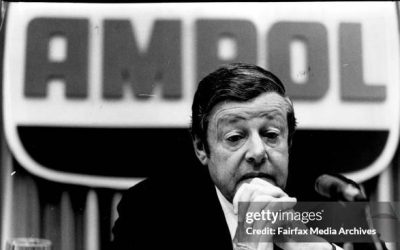
    McLennan, Sir Ian Munro (1909-1998)

    Citation: Claire E. F. Wright, ‘McLennan, Sir Ian Munro (1909–1998)’, Australian Dictionary of Biography, 2022.

    Biography entry for Sir Ian McLennan, engineer and company executive. McLennan began with BHP as a cadet, and was eventually promoted to Managing Director of the company, in addition to several other non-executive directorships.

    Pipelines and catalysts: Lessons from the history of women in corporate leadership

    Citation: Claire E. F. Wright. (2022). ‘Pipelines and catalysts: Lessons from the history of women in corporate leadership’, in Lessons from History: Leading historians tackle Australia’s greatest challenges, edited by Carolyn Holbrook, Lyndon Megarrity, David Lowe. Sydney: NewSouth. 

    Policy-oriented book chapter on what we can learn from the history of women in corporate leadership. History has important lessons for those who seek to make sustainable, intersectional improvements in diversity in leadership. The experiences of female board members in the past suggest we need to build pathways for improving access and diversity. Specifically, in order to achieve real reform we need to address blockages in the ‘pipeline’ to the boardroom (that is, structural career barriers) and shore up the ‘catalysts’ (or external and regulatory pressures) that force change on staid institutions. 

    The Whiteboard: The Whiteboard: Decoupling Diversity Reporting and Practice in Corporate Australia

    Citation: Claire E. F. Wright, Corinne Cortese, Abdullah Al-Mamun, and Searat Ali, ‘The Whiteboard: Decoupling Diversity Reporting and Practice in Corporate Australia’, Proceedings of the 2022 Academy of Management Meeting and best paper nomination, 25 March 2022.

    Using a mixed-methods approach, we explore the extent and change over time of both gender and ethnic diversity in leadership, and diversity disclosure in company annual reports, for Australia’s largest firms (ASX100) between 2005 and 2020. We interpret our findings with institutional theory, comparing the institutional ismorphisms driving change in each organisational form, and examining the extent to which there is rhetorical decoupling between them. Our findings suggest a disconnect between public commitment to diversity and Indigenous engagement, and the practice of appointing non-white corporate leaders. A lack of regulation surrounding diversity reports has contributed to this uneven disclosure and practice, with different outcomes for gender and ethnic diversity the result of different institutional isomorphisms. 

    Currently

    Senior Lecturer at UTS Business School


    Explore

    ARTICLES

    BOOKS


    I acknowledge the Traditional Custodians of country throughout Australia and their connections to land, sea and community. I live and work on the unceded lands of the Dharawal and Gadigal people. I pay my respect to their Elders past and present and extend that respect to all Aboriginal and Torres Straight Islander peoples today.

    All thoughts and opinions posted on this website are my own, and not reflective of the institutions I may represent.

    Copyright 2022 Claire E. F. Wright