
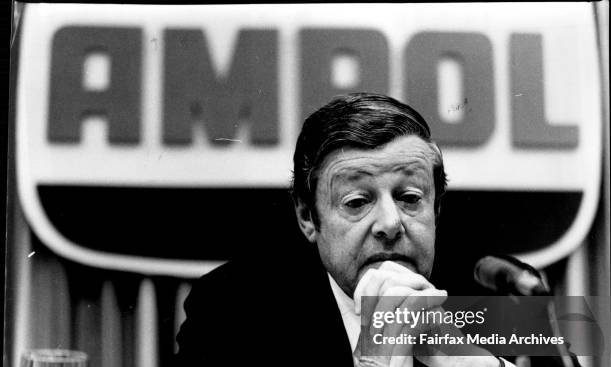
My new article, out today in Enterprise & Society, examines the OG corporate executive. The ‘company man’, the loyal, hardworking salaried manager who exchanged commitment to the corporation for lifelong employment and structured promotion, emerged because of important changes in corporate leadership. Industrial expansion and modernisation pressures meant that founders and family members were gradually replaced by salaried managers who were promoted from operational specialties into senior executive ranks. These men built careers inside organisations: they learned the business, proved their loyalty, accepted the hierarchy and earned their authority.
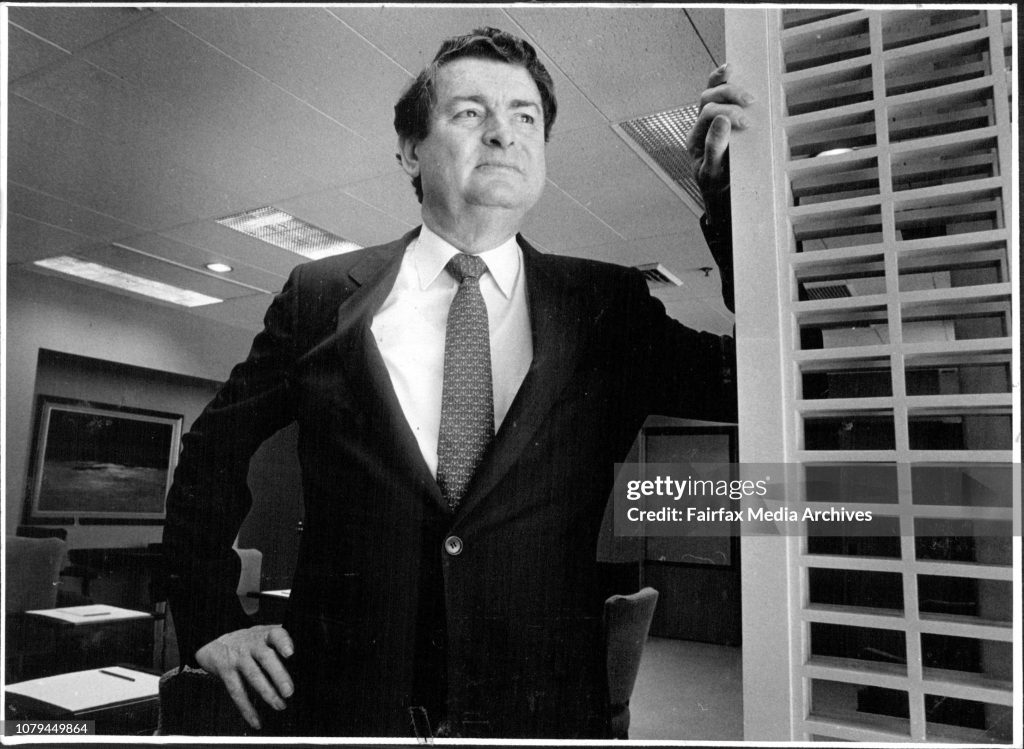
Maurice Williams of the Australian Gas Light Company.Mr. Maurice Williams, chief executive of the Australian Gas Light Co, had told a Hartogen director in March that AGL would not let Hartogen collapse, it was alleged in the NSW Supreme Court yesterday. May 13, 1987. Photo by Doris Thomas/Fairfax Media.
Their work was managerial, but also gendered. The company man emerged in a society structured around the male breadwinner and the belief that men belonged in the public sphere of work. Women, on the other hand, were expected to carry the domestic and caring labour that made men’s public careers possible. Management work also integrated claims to authority with hegemonic masculinity. Raewyn Connell argues that masculinity in a particular time and place operates as a hierarchy, in which ‘real men’ are those who successfully perform a set of tacitly agreed-upon values and behaviours. Dominance is performed through hierarchical success, deference, the ability to control others, and the ability to secure resources. Antifemininity is the aversion to, and devaluing of, anything coded as feminine through restricted emotionality, toughness, self-reliance, homophobia, and sexual conquest.
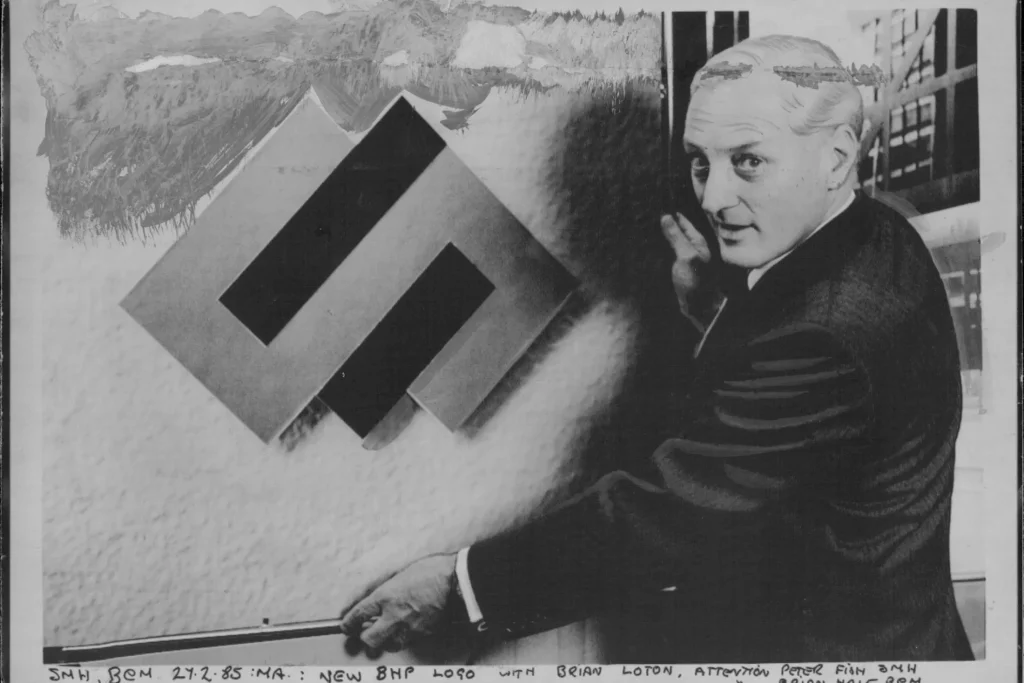
Brian Loton unveils the new BHP logo in 1985. Photo by Fairfax/AFR.
Management at this time integrated claims to authority with hegemonic masculinity. Here I borrow the metaphors psychologist Robert Brannon used in the 1970s to describe men’s desires and behaviours. Company men were rewarded for, and evoked a desire to be, a big wheel, mastering the public sphere through hard work, and using their success to control others. They were sturdy oaks, using their brilliance and strength for the benefit of their company and to protect Australian society. They were also stoic and humble, preferring to get on with the job rather than engage in competition and flamboyance. This form of masculinity was shaped by the requirements of their occupation and the social and economic context of postwar reconstruction. As executives, they were expected to demonstrate mastery of their profession, exhibit managerial authority, and earn the respect of employees. Successful company men were grounded, practical, and humble, and they were, materially and rhetorically, set apart from the extravagance and competitiveness of entrepreneurs, or the larrikin anti-authoritarianism of working-class men.
I always say to my students, gender (and race, ableism, cis-heteronormativity and so on) is in organisations, it is not suddenly introduced when women enter. In recent decades, women and other minorities have entered an occupation structured by the original corporate executive, the ‘company man’. This measures them against a standard that is not only outdated, but is inaccessible to them. This stifles efforts towards equality. Organisations want more diverse leaders but they often leave the underlying model of leadership untouched. They count the number of senior women, but do not always question the behaviours, career paths and work habits that senior roles demand. They celebrate inclusion, while still rewarding hierarchical success, emotional restraint, individual achievement, and detachment from the home. Equality, therefore, requires more than just representation, it requires rethinking the fundamentals of how managers are hired, evaluated and promoted.
0 Comments